Last updated: May 2026.
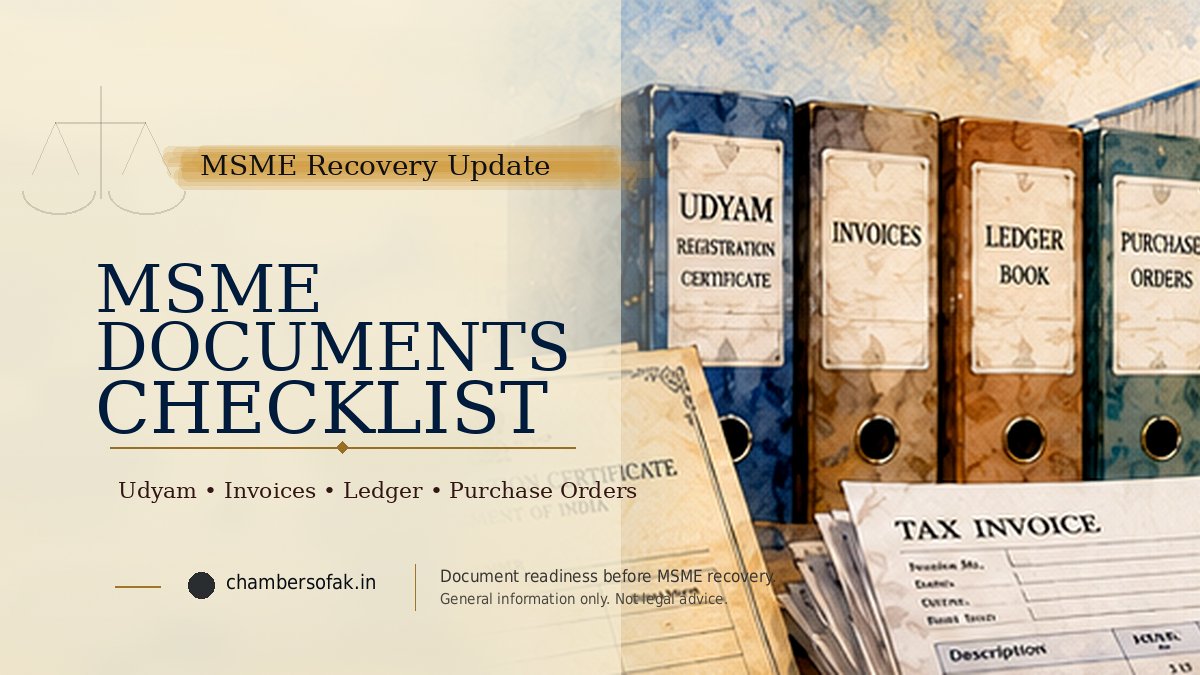
Before assessing a delayed-payment matter, confirm whether the supplier is registered as a micro or small enterprise and whether the transaction falls within the relevant business activity. Keep the Udyam Registration Certificate, enterprise details, registration date and activity classification ready.
For older transactions, also preserve any previous MSME registration record and the date on which the buyer placed the order. The timing of registration, supply and invoice issuance can affect how the matter is evaluated.
Invoice-Wise Recovery Table
Prepare a simple invoice-wise table instead of a general lump-sum claim. This helps identify the exact amount due, due date, part payments and buyer objections.
- Invoice number and invoice date.
- Purchase order or work order reference.
- Goods supplied or services rendered.
- Invoice amount, tax amount and total outstanding.
- Delivery or completion date.
- Payment due date and agreed credit period.
- Part payment, TDS, debit note or deduction details.
- Buyer objection, if any, invoice-wise.
Core Documents To Keep Ready
- Udyam Registration Certificate and enterprise profile.
- Purchase orders, work orders, contracts or email confirmations.
- Invoices, e-way bills, delivery challans, LR copies and completion records.
- Ledger account, statement of account and payment follow-up records.
- Email, WhatsApp, letter or portal communication with the buyer.
- Debit notes, quality objections, rejection notices or dispute communications.
- Legal notice, reply notice and settlement discussions, if any.
Buyer Objections And Dispute Record
If the buyer alleges defective goods, delayed delivery, incomplete work, wrong billing, set-off or reconciliation issues, preserve the full objection trail. Do not ignore objections merely because payment is pending. Recovery strategy depends on whether the buyer admitted liability, disputed quality, sought time, made part payment or raised objections only after repeated demands.
Where there are continuing supplies, separate admitted invoices from disputed invoices. A clean account reconciliation can make the first legal review more efficient.
Payment Chronology
Create a date-wise chronology covering the order, supply, invoice, due date, reminders, buyer response, part payments, notice and present outstanding amount. Attach bank statement entries or UTR details for payments received.
For multiple buyers or group companies, prepare a separate folder and chronology for each buyer. Avoid mixing transactions unless the documents clearly show a common contractual or accounting basis.
MSEFC / Legal Enquiry Preparation
Before approaching a forum or sending an enquiry, identify the buyer's full legal name, registered office, GST details, email address, purchase location, delivery location and jurisdiction-linked facts. Forum strategy may depend on contract clauses, place of supply, buyer location, limitation and the documents available.
Also check whether the contract contains an arbitration clause, exclusive jurisdiction clause, quality-inspection clause or dispute-resolution mechanism. These clauses should be reviewed before deciding the next step.
Related Site Resources
References / Sources
Primary statute reference: Micro, Small and Medium Enterprises Development Act, 2006 on India Code.
Share Udyam registration, buyer details, invoice-wise outstanding table, delivery proof, payment chronology and buyer objections. Avoid sending confidential documents until consultation or engagement is confirmed.
Start Case Enquiry